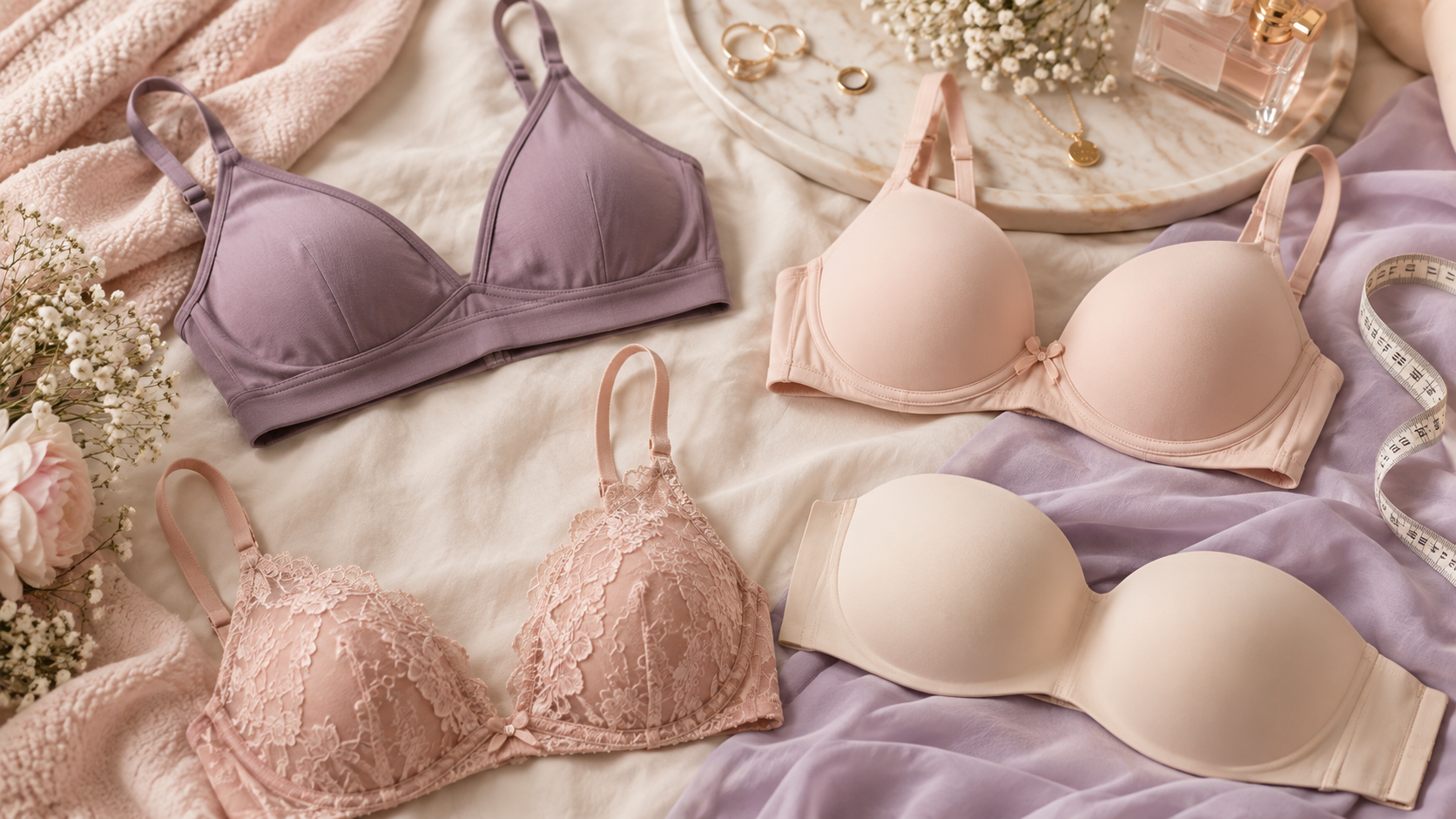
The band seems fine.
The label says the right cup size.
And yet the cup gaps at the top, presses awkwardly at the sides or contains so much padding that your actual breast tissue seems almost incidental.
For women with smaller breasts, that experience is common enough that it can start to feel personal.
It usually is not.
Small-bust bra fit is much more about proportions than the letter printed on the label.
A Smaller Cup Is Not Always a Shallower Cup
One of the most confusing things about bra sizing is that two bras carrying exactly the same size can fit completely differently.
A moulded cup may be relatively deep and expect the breast to project forward. Another bra in the same nominal size may be much shallower and spread that volume across a wider area.
If your breast shape is naturally shallow, the deeper cup can create the familiar empty space along the upper edge even though the cup is not necessarily too large.
That is why repeatedly sizing down does not always solve the problem.
You may simply exchange one fit issue for another: less space at the top, but a wire that now sits on breast tissue or a cup that feels too narrow.

Why Specialist Small-Cup Bras Can Feel Different
Some lingerie brands build specific ranges around AAA, AA and A cups rather than treating those sizes as an afterthought.
That can affect the depth of the cup, the length of the wire, the position of the straps and where any padding sits.
It is one reason specialist designs are worth comparing if mainstream bras repeatedly leave empty space at the top.
A personal account of that trial-and-error process is described in what finally worked when shopping for bras for a small bust.
The broader comparison of the best bras for small breasts also separates everyday fit from enhancement, which is useful because those are really two different problems.
Padding Is Not the Same as Fit
Small breasts are often marketed to as though more padding is automatically the answer.
But padding cannot correct a badly shaped cup.
In fact, heavy fixed padding can make the mismatch more obvious. The lower portion of the bra may push the breast upward while the upper section still stands away from the body.
A lighter bra designed for the correct proportions can sometimes produce a much smoother result.

Push-Up Bras Are a Separate Question
There is nothing wrong with wanting more cleavage or a fuller shape.
The important distinction is whether you are solving a fit problem or choosing a particular look.
A push-up bra generally uses padding and cup construction to move breast tissue upward, inward or both.
For a smaller bust, where that padding sits can matter just as much as how much of it there is.
Padding underneath the breast tends to create upward lift.
Padding positioned toward the outside of the cup can encourage tissue toward the centre.
A deep plunge can then make that central fullness more visible.
If enhancement is specifically what you want, the guide to the best push-up bras for small busts looks at those differences rather than treating every padded bra as essentially the same thing.

Side Padding Can Change the Result
This is one detail that tends to get overlooked.
If breasts naturally sit farther apart, adding more padding only underneath them may create lift without creating much central cleavage.
Side padding can produce a different effect because it directs tissue inward as well as upward.
The After Eden Two Way Boost, for example, is described in the current product data as using separate boost pads beneath and beside the breast.
That construction illustrates why two bras containing a similar amount of padding can create very different shapes.

What to Look at Before Changing Cup Size
If a bra is not sitting properly, it helps to look at the entire fit rather than immediately deciding your cup size must be wrong.
- Does the band stay level? A band riding upward reduces support and changes how the cups sit.
- Is there empty space only at the top? That can suggest a cup-shape mismatch rather than excessive cup volume.
- Does the wire sit on breast tissue? The cup may be too narrow even if another part appears loose.
- Where is the padding? Bottom, side and removable padding create different effects.
- What are you actually trying to achieve? Comfortable everyday fit, a smoother T-shirt shape and dramatic cleavage do not necessarily require the same bra.
The Emotional Part of Bra Shopping
There is also something less technical happening here.
Clothing is supposed to fit the body.
But after enough badly fitting bras, it is easy to start feeling as though the body is failing to fit the clothing.
That distinction matters.
A gaping cup is not evidence that your breasts are inadequate.
A push-up bra is not evidence that they need correcting.
And choosing an ultra-padded bra because you enjoy the effect is entirely different from believing you cannot be attractive without one.
The bra is allowed to be wrong for your body. Your body does not have to be wrong for the bra.
Start With the Result You Actually Want
If everyday bras repeatedly gape, begin with shape and fit.
If you want more cleavage for a particular dress or simply enjoy a fuller silhouette, then look specifically at push-up construction.
Those decisions become much easier once you stop treating “small breasts” as one single fitting problem.
You can read one woman’s experience of learning that distinction in I Stopped Buying Bras That Were Made for a Body I Don’t Have.
For product comparisons, see the complete guides to the best bras for small breasts and the best push-up bras for small busts.
Sometimes the most useful change is not finding a bra that makes your body look different.
It is finding one that finally seems to understand the body you already have.