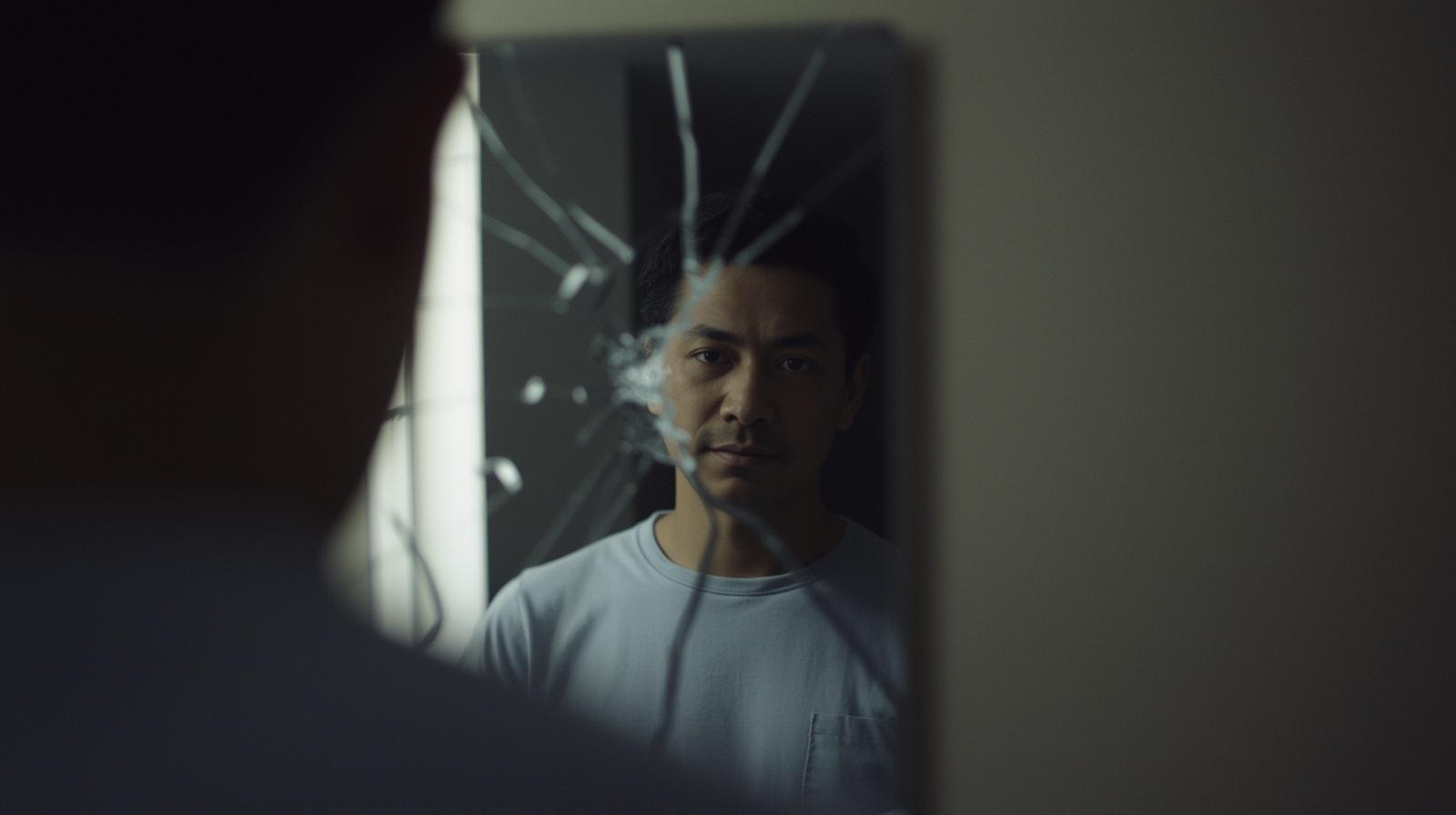
One of the strangest things about a breakup is that the pain does not stay in one place.
At first, you miss them.
You miss their voice. Their presence. The routines that quietly formed around the relationship.
Then something shifts.
You stop thinking only about the person you lost and start thinking about the effect your grief is having on everyone else.
You notice how many times you have talked about the breakup.
You wonder whether your friends are tired of listening.
You catch yourself apologizing before mentioning how you feel.
You tell people you are doing better when you are not.
Slowly, almost without noticing, the grief itself starts to feel embarrassing.
Not because it hurts.
Because it keeps hurting.
There is an unspoken expectation that sadness should move in a straight line.
You are supposed to be devastated at first, gradually improve, and eventually become the person who says, “It was for the best.”
Real grief rarely works like that.
Some days you feel fine.
Then a song, a photograph, a memory, or a random Tuesday afternoon pulls you straight back into the loss.
The difficult part is not always the sadness.
Sometimes it is the shame.
The feeling that your emotions have become inconvenient.
The feeling that you should be further along by now.
The feeling that needing support is somehow proof that you are weak.
This is where many people start to confuse pain with identity.
Instead of saying:
“I am struggling.”
They start saying:
“I am too much.”
Instead of:
“I need support.”
They start thinking:
“I am a burden.”
The difference matters.
One describes an experience.
The other becomes a belief.
And beliefs have a way of spreading.
A breakup becomes evidence that you are hard to love.
Your sadness becomes evidence that you are emotionally exhausting.
Your need for reassurance becomes evidence that you are needy.
Soon you are not only grieving the relationship.
You are defending your worth against it.
But grief was never meant to be a performance.
It was never supposed to be efficient.
It does not arrive on schedule.
It does not leave on command.
And needing support while carrying it does not make you a burden.
It makes you human.
Sometimes healing begins with a surprisingly small shift.
Not:
“I am a burden.”
But:
“I am afraid that my pain is becoming a burden.”
One is an identity.
The other is a fear.
And fears can be questioned.
If this feeling has been following you since your breakup, I wrote a deeper guide on feeling like a burden after a breakup, including why it happens, how it connects to shame and rejection, and what it can look like when grief quietly turns into self-judgment.